Film
Candyman
- Director
- Bernard Rose
- Certificate
- 18
- Running Time
- 99 mins
After the unmitigated commercial and artistic disaster that was Chicago Joe and the Showgirl, British director Bernard Rose desperately needed a hit to raise his stock in Hollywood. This he managed in 1992 by transposing Clive Barker‘s short story The Forbidden from a Liverpudlian council estate to an equally grim Chicago housing project, while retaining the supernatural tone of his intelligent but little seen debut, Paperhouse.
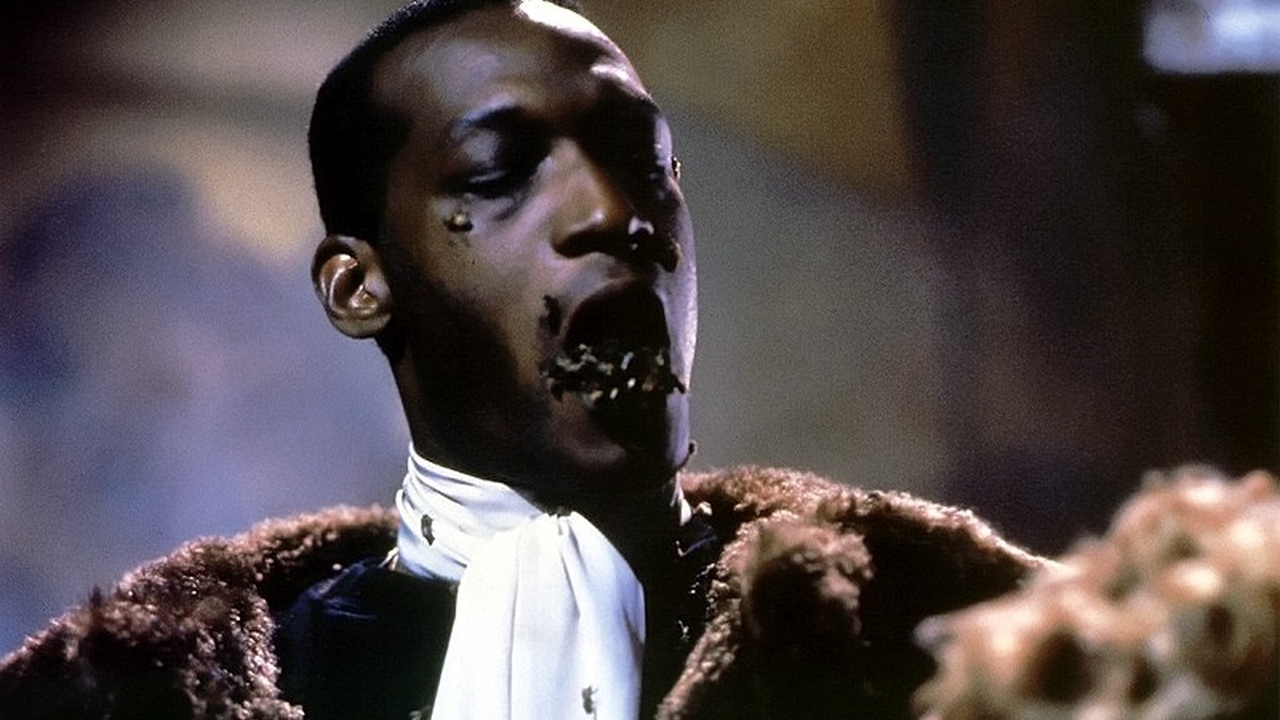
Helen Lyle (Virginia Madsen) is a sceptical doctoral student of urban mythology whose agreeable research involves recording ‘poodle in the microwave’ yarns recited ghoulishly by Illinois freshmen. But one specifically local tale persists. It is said that if you look into a mirror and recite his name five times, the grisly, hook-handed Candyman (Tony Todd) will materialise and slice you open from groin to forehead. Naturally, in the interests of academic research and the need to kick-start the plot after a long introduction, Helen and her co-researcher Bernadette Walsh (Kasi Lemmons) do just this. Then they go exploring in the run-down Cabrini Green housing projects the psycho is supposed to inhabit. As Helen is drawn into the Candyman’s world, she soon finds herself accused of murder, child abduction and insanity.
While the Freddy and Jason stories of the same period used their sanitised contemporary settings as a springboard for a lot of routine slice’n’dice, the Candyman is rooted more firmly in urban reality and fear. The filthy, graffiti-encrusted housing projects have an authenticity that ’90s audiences recognised from the likes of Boyz N the Hood or Straight Out of Brooklyn, and the film makes a convincing bid for the accolade of Most Squalid Public Toilet Scene in a Major Motion Picture.
Virginia Madsen acquits herself well in a role that, unusually for the genre, allows for some character development in addition to the usual running about and screaming stuff, although Tony Todd’s Candyman is a rather disappointing, one-note manifestation of Barker’s trademark loquacious demons. But despite the subsidiary themes of infidelity, child molestation and so on, even the carefully racially mixed cast cannot distract from the uncomfortable feeling that the central issue being addressed here is the professional white female’s fear of the urban black male.
 Our newsletters emailed directly to you