Film
Frida
- Director
- Julie Taymor
- Certificate
- 15
- Running Time
- 118 mins
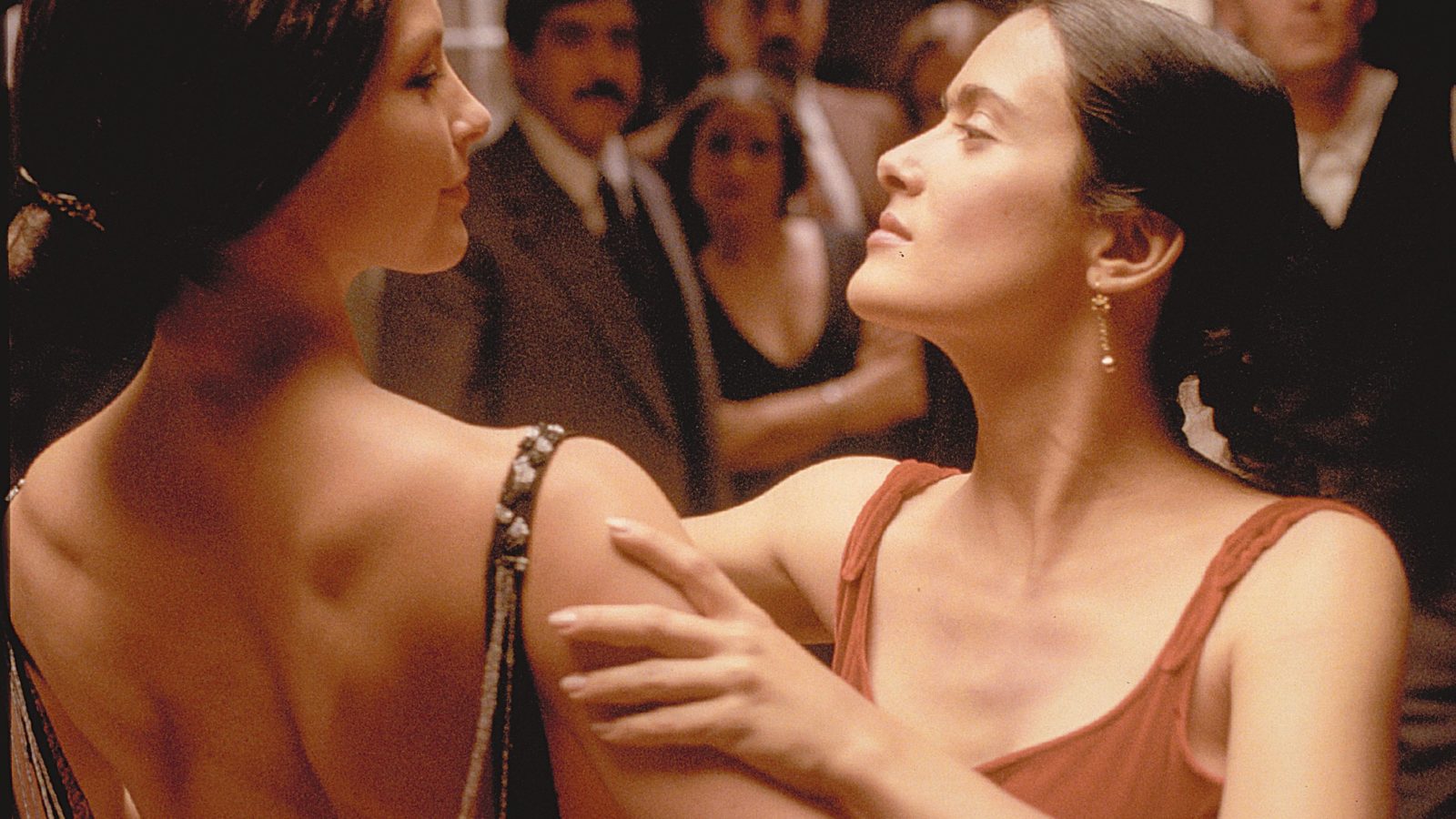
They don’t get any more exotic than Frida Kahlo. A half-Mexican, half-German-Jewish artist who survived a terrible childhood injury that left her in pain for most of her adult life, she went on to marry philandering Commie dauber Diego Rivera (twice) and also enjoyed many a lesbian coupling, plus a legover with Leon Trotsky. That’s a lot of incident for a life of just 44 years. Producer and star Salma Hayek spent more than a decade trying to get 2002’s Frida off the ground, and was duly rewarded with a Best Actress Oscar nomination. It’s odd, then, that director Julie Taymor should have opted for such a meat’n’potatoes biopic approach after her brilliant and daring if under-appreciated screen version of Shakespeare’s Titus Andronicus. Some of her old visual magic is there in the film’s imaginative animated tableaux and fantasy sequences, but one suspects that it didn’t help having four credited writers (plus an uncredited polish by Edward Norton, who cameos as Nelson Rockefeller in a scene you’ll recall from Tim Robbins’ earnest Cradle Will Rock if you were one of the half-dozen or so who paid to see it).
Sporting a method monobrow that makes her look like the lost Gallagher sister, Hayek certainly inhabits the role with a commitment and passion one cannot imagine being mustered by J-Lo or Madonna, her reputed rivals during the project’s long gestation. The tram collision that crippled Kahlo is gruesomely portrayed, but thankfully Taymor resists the usual artist biopic cliches as she traces an otherwise prosaic ensuing career arc. Alfred Molina is impressive as Rivera, who was already both famous and married when they met, although they make for an odd-looking couple: him huge, lusty and bearlike; her petite, fiery and intense. “It was just a fuck,” a baffled Rivera says when she discovers one of his serial infidelities. “I’ve put more emotion into a handshake.” (Don’t try this excuse at home, folks.) Shame, then, that there are so many clunky moments in between all the obligatory boozy boho behaviour and heated political debate. Geoffrey Rush’s embarrassing Trotsky, for example, is a randy old goat with a silly Russian accent, for whom that ice pick didn’t come soon enough.
It’s back on screen for International Women’s Day courtesy of The Wandering Cinema. The evening also includes a self-portrait competition, Mexican bingo and – woo-hoo! – free monobrows. Go here for further information.
 Our newsletters emailed directly to you