Music / 60s folk
Bristol’s mover and shaker of folk tells all
As editor of fRoots magazine, Ian A Anderson has been one of the most influential figures in the UK folk and world music scenes, recognised with awards from the English Folk Dance and Song Society and others.
In the late 60s he played a vital role in putting Bristol at the heart of the folk and blues revival sweeping the country, helping establish the legendary Bristol Troubadour folk club and Village Thing record label.
As well as tirelessly promoting the music he has always been a singer/guitarist and bandleader, too.
Now, with plans afoot to celebrate the sixtieth anniversary of his first paid gig in Bristol in December, this lifetime of experience has been encapsulated in Alien Water, his autobiographical book published this year.
As a young guitarist in Weston Super Mare Ian A Anderson discovered the Blues and was smitten.
“I wasn’t being a folk singer,” he recalls. “I was being a 65-year old Mississippi sharecropper. You could do that back then if you were 18. The idea of cultural appropriation hadn’t been invented.”
‘Back then’ was 1965 and the beginning of what would become known as the British Blues Boom as well as an important revival of British folk music.
The following decade would see Bristol become one of the country’s hubs for both, with Ian’s enthusiasm at the forefront.
His commitment to the music would lead to a lifetime’s work as musician, music promoter, record label impresario, radio presenter and music journalist, putting him at the heart of the UK folk and world music scene for six decades. He even – quite literally – put Clifton Village on the map.
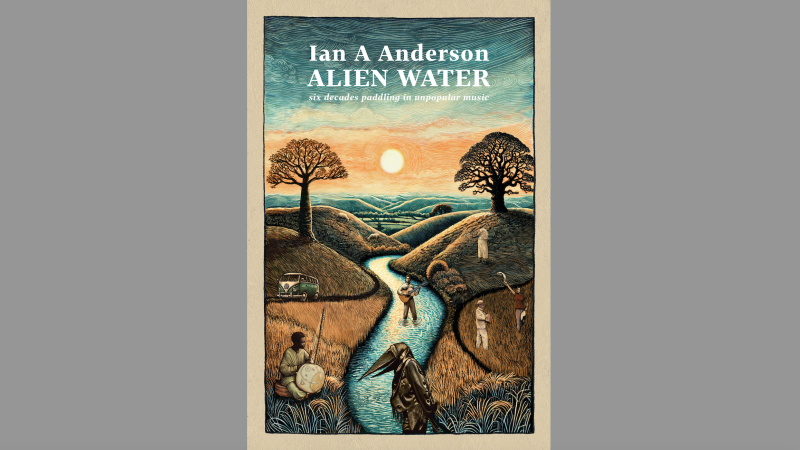
For anyone with even a passing interest in folk and world music Alien Water is an absorbing read because of Ian’s unique position as both participant and chronicler over the years.
While always a performer himself and spending years arranging national and global band tours and festivals for four decades he was also the founding editor of fRoots (aka Folk Roots), the definitive national monthly music magazine that was sadly wound up in 2019.
This double perspective gives his book a wealth of detail and entertaining anecdotes from Ian’s own experience and others’, while the range of his activities provides candid insights into the ongoing challenges facing independent recording, promotion and publishing.
And thanks to Ian’s skills as a wordsmith it is also (and most importantly) highly readable! Bristol 24/7 caught up with the author to find out more.
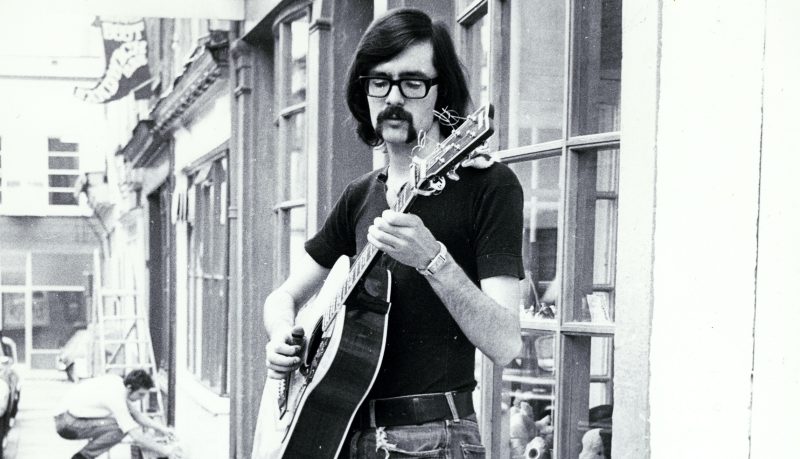
Ian busking on a Clifton street in 1970
How did that first gig in 1965 come about?
IAA: I grew up in Weston-Super-Mare and a pub – the London – had great sessions in their back room.
My friends and I formed a jug band called the Backwater Jook Band that got written up in the Weston Mercury and a presenter from local TV spotted it and invited us to play.
We assembled a loose collective, did the gig and that was my first ever paid gig. Soon after I moved to a draughty garret in Redland Road, Bristol and my then girlfriend insisted we went to the Ballads and Blues night in what is now the Louisiana.
It was brilliant so I started going every week. They tolerated my floor spots and it grew out of that. When the legendary Bristol Troubadour folk club opened in Clifton in 1966 myself, Al Jones and Elliot Jackson became a resident trio there.
Was that when the Clifton Village thing started?
IAA: We sat in Splinters coffee house to draw up a generic poster for the club and thought let’s give the address as Clifton Village – like New York’s Greenwich Village.
That term hadn’t been used before then and I’ve fairly well established that was what started the usage of the name.
The Troubadour became very important on the national scene – why was that?
IAA: A lot of reasons – it was open every night of the week, mostly, so a scene evolved around it and it was unlicensed which meant that younger people could go.
It was a very energetic scene that quickly formed an axis with (famous folk club) Les Cousins in London so all the people who you would see up there – like Bert Jansch, John Renbourn, Sandy Denny, the Young Tradition, the Watersons, Ralph McTell, Michael Chapman – they all played at the Troubadour as well.
A lot of musicians evolved out of the Troubadour or even moved to Bristol because it was a good scene and they could play regularly and try out new stuff.

Club founders Ray and Barbara Willmott outside the Troubadour Folk Club – photo: courtesy Ray Wilmott
It was pretty small and on two floors: how did that work?
IAA: That was a bit of a bone of contention for some performers. If it was full you’d do your set upstairs then go downstairs and do it again. I don’t know of any club ever that was like that.
It sort of worked. John Martyn was the only one to refuse to do that. We started doing Blues nights there once a month which were very successful so we moved them to the Old Duke where they became even more successful with literally queues around the block.
In the end we moved to the Full Moon in Stokes Croft which had a room that could hold about 300.
That Blues scene got national recognition didn’t it?
IAA: Every time we had one of the country Blues players come down we’d take them out to Frenchay in the afternoon and record a couple of tracks.
Eventually we put out a compilation album in the summer of 68 which kicked everything off. John Peel loved it to death, played all the tracks and got several people off it – including myself – to do sessions for his Radio 1 show. Which was kind of why I moved to London – I needed to be somewhere more central as things kicked off.
What happened for you musically, then?
IAA: I was solo in the late 60s, occasionally in a duo with Bristol guitarist Ian Hunt, then formed a duo called Hot Vultures with my then wife Maggie Holland, a singer, banjo and bass player. That ran for about seven or eight years, we did God knows how many hundreds of gigs throughout the 70s, lots in mainland Europe.
That expanded into the English Country Blues Band with Stroud’s Rod Stradling and the late Chris Coe. We expanded that further into Tiger Moth, a very noisy electric ceilidh band influenced by music from other places, Italy, Tex-Mex and so on but still playing for English country dances.
For most of the 90s I was busy looking after a band from Madagascar called Tarika and then in this century began playing in various things again, a trio called the Blue Blokes Three, a duo with Ben Mandelson called the False Beards. About eight years ago I became solo again.
And there was the Village Thing record label…
IAA: I moved back to Bristol at the end of ’69 and things around the Troubadour were really, really buoyant and there were a lot of people about who deserved to make records.
I wanted to start an independent label where all these people who deserved to be recorded could do it on their own terms. And it did very well. A mixture of singer-songwriter guitarists like Steve Tilston, Wizz Jones and myself, but also a few popular folk entertainers, notably Fred Wedlock and the Pigsty Hill Light Orchestra.
At a time when Island could only sell less than 1000 copies of Nick Drake albums we were selling 3-5000 copies of ours without major label distribution.
Radio people were very kind to us – people like John Peel, Bob Harris. Looking back that was a real golden age for folk in Bristol; some of those albums fetch ridiculous prices, two or three hundred quid. I have the full set – it may have to be my pension some time!
How did the Folk Roots magazine come about?
IAA: Later in the 70s we started a small regional magazine that grew just as the other national folk magazines folded so we became national by default.
By 1985 I was persuaded to go monthly and onto the news stands. It was my albatross, really. It was extraordinarily successful in what it did for the folk scene, not so much so in what it did to my lifestyle: there were a lot of 100 hour working weeks.
But it was a good thing and I’m immensely proud that for 40 years we put out every single issue on time in spite of what the world and the bank could throw at us.
You also became very involved with ‘world music’ at that time.
IAA: Starting in the 80s I was doing short weekly programmes for the World Service for over ten years. It was what I’ve always wanted to do which is introduce people to new music – albeit some of it was old music, of course.
As more people got interested we felt the need for a term that record shops could use for a box to hold all these weird records people like John Peel, Charlie Gillett and Andy Kershaw were playing on the radio.
The name world music got the show of hands because it included the most things and left out the least. You can think of all the music that went on to succeed internationally because there was that box in the record shopI
It’s probably not needed anymore because people are more educated now – you can have boxes for Cuba, Mali and Bulgaria or wherever because more people now have an idea of what that music is.
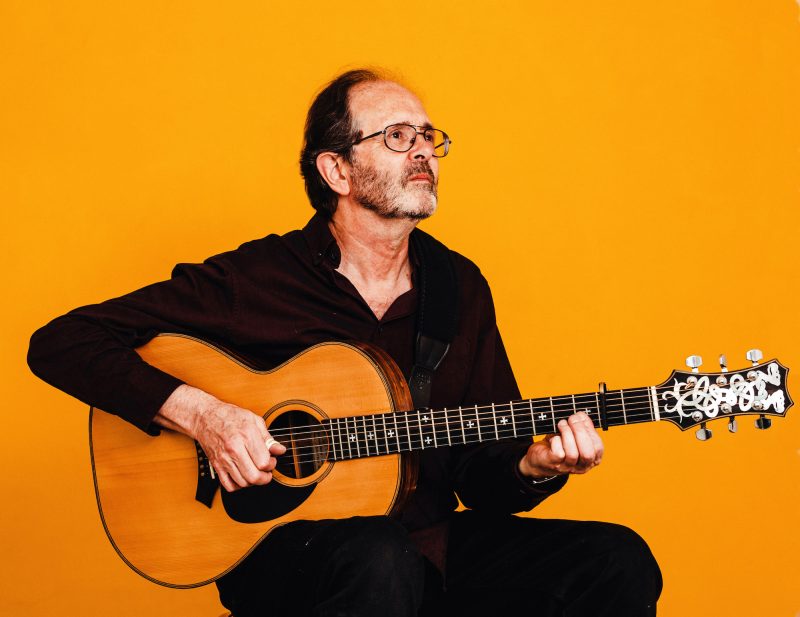
Ian A Anderson with ‘that’ guitar – photo: Elly Lucas)
You have a guitar with a great world music pedigree, haven’t you?
IAA: Yes. I’ve played a lot of different guitars over the years in search of ‘the one’ and then in 1979 I was living near an English guitar maker called Nigel Thornbory.
I got him to make me a pair of guitars that combined all the things I’d found I liked in guitars – body size, neck width and materials. He made a pair, one a regular design, the other with a flat fingerboard and cutaway for playing slide guitar.
The regular one I lent to (Malian desert blues legend) Ali Farke Toure on his first British tour and he fell in love with it. He used to borrow that for all his UK touring.
So then word got around and when other people were bringing top West African guitarists they’d come to me: “Can Baaba Maal borrow your guitar?” … Or Djelimadi Tounkara, or Seckou ‘Diamond Fingers’ Diabate? Of course I agreed – I trusted all those people and Ali was a real gentleman.
He did try to buy it off me when he went to America to record with Ry Cooder but I told him no, it’s my baby.
Alien Water is an amazingly detailed book covering sixty years – did you keep journals?
IAA: I’ve kept paperwork – I never threw out a single gig contract! – and photos. And of course there was forty years of the magazine to plough through.
I worried that it’s too detailed – there’s lots of names in there that people like me know but there may be readers who haven’t heard of any of them.
I have seen people on Facebook saying they had to keep putting the book down and Googling who people were and then going on to YouTube to see what they did. That works for me!
How do you feel the English folk scene has been doing lately?
IAA: Well after the Millennium there was a real explosion – finally! – of a new generation, now in their forties of course!
And Bristol is the centre for a really important evolution of English instrumental music based on traditional music. Spiro would have been the catalyst but then you have people like Hedera, Three Cane Whale, Eleven Magpies and so on.
They’ve influenced people like the wonderful Leveret, based in Stroud and others. It’s a wonderful thing which I didn’t expect and it pleases me no end: it’s got artistic air, Bristol.
After 60 hectic years will you be continuing to perform in the future?
IAA: I’m not quite sure what the future holds. I increasingly hate the travelling which makes doing gigs a bit difficult.
I am hoping to get a gig in Bristol around the 60th anniversary in December. I have a gig in Cambridge on the actual date but I really want to do one in Bristol, partly because it should be done but mainly because I’d love to do it.
Buy copies of Alien Water from the Ghost In The Basement Bandcamp page.
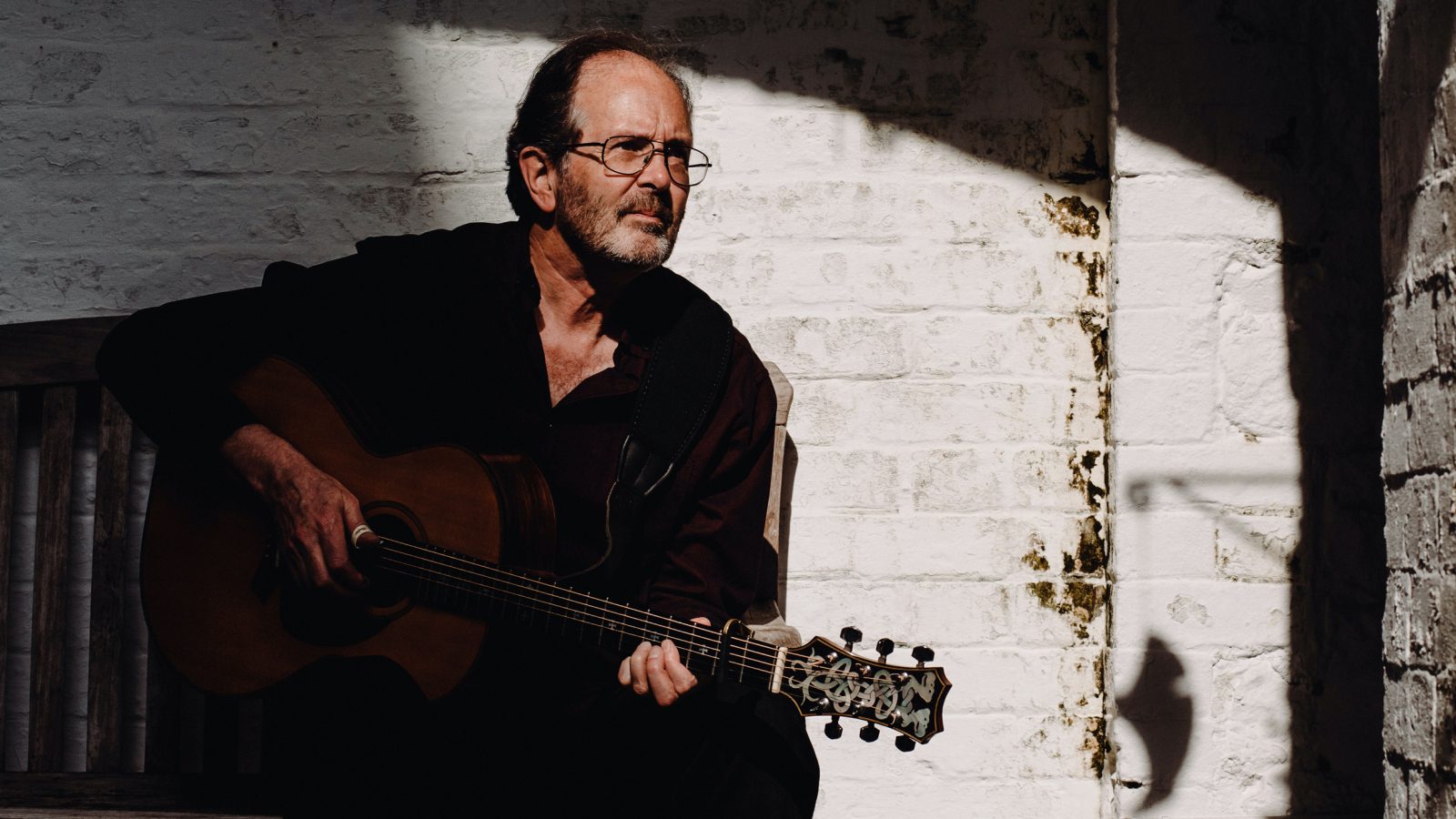
Main image: Ian A Anderson
Read next:
- In photos: Love Saves the Day 2025, day 2
- In photos: Love Saves the Day 2025 day 1
- Review: Dot to Dot 2025 – ‘Exploration, discovery, creative expression’
- Bristol Refugee Festival 2025 celebrates the power of community
 Our newsletters emailed directly to you